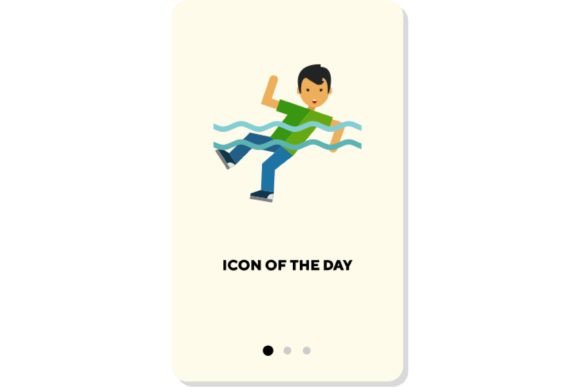
Person Getting Hurt Thin Flat Icon. Pain: Visualizing Injury in Digital Design
In the fast-paced world of user interface design, clarity is king. We often spend hours perfecting color palettes and typography, yet the smallest elements—the icons—carry some of the heaviest cognitive loads. Consider the Person Getting Hurt Thin Flat Icon. Pain. At first glance, it might seem like a niche graphic asset, but its utility spans far beyond simple decoration. This specific vector illustration serves as a universal signifier for injury, accident, contusion, and physical distress. When integrated correctly, it bridges the gap between abstract data and human experience, allowing users to instantly recognize danger or medical needs without reading a single word.
The "thin flat" style is particularly crucial here. Unlike heavy, filled icons that can feel aggressive or cartoonish, thin line art offers a professional, modern aesthetic that blends seamlessly into contemporary web and app designs. It suggests seriousness without causing visual alarm, making it ideal for contexts where you need to communicate risk or injury with dignity and precision.
Enhancing Safety and Emergency Applications
The most immediate application for this icon is in safety-oriented digital products. Imagine you are designing a mobile application for workplace safety compliance or a smart home security system. In these environments, speed is essential. A user reporting an incident does not have time to navigate complex menus. A clearly defined person getting hurt symbol allows for one-tap reporting.
- Industrial Safety Apps: Workers can quickly log minor accidents or near-misses. The icon acts as a visual anchor for the "Report Injury" button, reducing friction during stressful moments.
- Emergency Response Platforms: For first responders or community alert systems, this icon can denote locations where medical assistance is required due to physical trauma, distinguishing it from general health issues or fire hazards.
- Wearable Tech Interfaces: On small screens like smartwatches, space is premium. A thin, isolated vector sign takes up minimal pixel real estate while remaining legible, ensuring that fall detection or heart rate anomaly alerts are immediately understood.
By using a standardized symbol for pain and contusion, developers reduce the cognitive load on users who may be panicking or in pain themselves. The familiarity of the human figure in distress transcends language barriers, making it a powerful tool for global applications.
Healthcare and Telemedicine User Experience
Beyond emergency scenarios, the healthcare sector benefits immensely from precise iconography. Telemedicine platforms and patient portals often require users to self-report symptoms before consulting a doctor. Here, the Person Getting Hurt Thin Flat Icon. Pain becomes a critical navigational aid.
Consider a symptom checker chatbot. Instead of listing dozens of medical terms, the interface can present broad categories represented by icons. A user experiencing back pain or a sprained ankle can intuitively select the injury icon rather than searching for "musculoskeletal disorder." This approach democratizes access to care, helping users who may not have advanced medical vocabulary describe their condition accurately.
Furthermore, in electronic health records (EHR) designed for quick scanning by nurses and doctors, these icons can highlight patient history. A small, thin-line icon next to a patient’s name can indicate a history of frequent falls or chronic pain conditions, allowing care providers to adjust their approach without digging through lengthy text notes. It is about efficient communication in high-stakes environments.
Insurance and Legal Tech Clarity
The insurance industry is notoriously dense with jargon. However, modern insurtech companies are striving to simplify the claims process. When a user files a claim for a personal accident or car injury, the interface needs to guide them gently but firmly. Using a pain and injury vector element helps categorize the claim type visually.
For example, an auto insurance app might use different icons for vehicle damage versus bodily injury. The person getting hurt icon clearly delineates that the claim involves medical costs, lost wages, or pain and suffering, rather than just mechanical repairs. This visual distinction helps set user expectations regarding the documentation required, such as medical reports versus mechanic estimates.
Similarly, legal tech platforms that help individuals seek compensation for workplace injuries can use this symbol to streamline intake forms. It creates an empathetic connection, acknowledging the user's physical state while guiding them through the bureaucratic process. The thin flat style ensures the interface remains clean and trustworthy, avoiding the cluttered look that often plagues legal websites.
Design Considerations and Best Practices
While the utility of this icon is clear, its implementation requires thoughtful consideration. Not all vector illustrations are created equal. When choosing a Person Getting Hurt Thin Flat Icon. Pain for your project, keep the following factors in mind to ensure it enhances rather than detracts from the user experience.
Consistency in Stroke Weight
Since this is a "thin flat" icon, it must match the stroke weight of your other interface elements. If your navigation icons have a 2px stroke and your injury icon has a 1px stroke, it will look out of place and potentially unimportant. Consistency builds trust. Ensure the vector is scalable and that the lines remain crisp at various sizes, from favicon dimensions to large banner headers.
Cultural Sensitivity and Tone
Depicting pain is delicate. The icon should convey discomfort or injury without being overly graphic or distressing. The "thin flat" style naturally mitigates this risk by abstracting the reality into a symbol. However, avoid poses that might be interpreted as violent or aggressive unless specifically designing for crime reporting tools. The goal is to represent accident and contusion, not assault, unless the context explicitly demands it. Always test the icon with diverse user groups to ensure it is interpreted as intended.
Color and Accessibility
While the icon itself is a shape, its color usage matters. In many design systems, red is associated with danger or error. Using red for this icon can effectively signal urgency. However, for accessibility, do not rely on color alone. Users with color vision deficiencies may not distinguish a red icon from a green one. Ensure the shape is distinct enough to be recognized in grayscale. Pairing the icon with clear label text, such as "Report Injury" or "Medical Help," provides a redundant cue that ensures no user is left behind.
Versatility Across Industries
The beauty of isolated vector sign elements lies in their adaptability. Beyond the sectors mentioned, this icon finds relevance in fitness apps, where it might mark exercises that carry a higher risk of injury if performed incorrectly. In travel apps, it could highlight areas with poor medical infrastructure or high accident rates. Even in gaming, it can represent health depletion or character status effects.
Each use case demands a slight adjustment in context but relies on the same core recognition factor. The human brain processes images 60,000 times faster than text. By leveraging a well-designed injury and accident concept icon, you are tapping into this primal processing speed. You are not just adding a graphic; you are facilitating quicker decision-making, enhancing safety, and improving overall usability.
Ultimately, the Person Getting Hurt Thin Flat Icon. Pain is more than a decorative asset. It is a functional tool that communicates vulnerability and need. Whether you are building a life-saving emergency app or a streamlined insurance portal, integrating this symbol thoughtfully can transform how users interact with your product. It turns abstract concepts of pain and risk into tangible, actionable interface elements, proving that even the smallest design choices can have a profound impact on human experience.