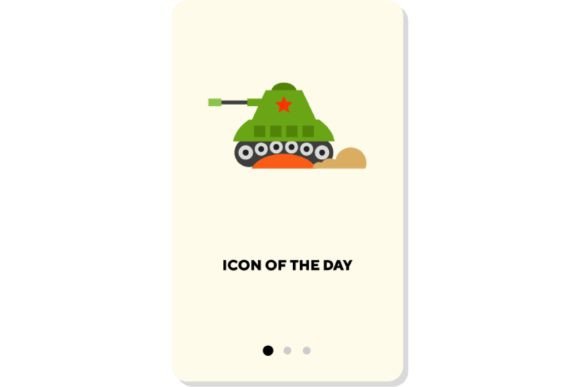
Visualizing Conflict: The Under Attack Flat Icon
In the fast-paced world of digital design, clarity is king. Whether you are building a mobile game, designing an educational app about historical events, or creating a dashboard for a strategy simulation, visual shorthand is essential. This is where specific graphic assets like the Under Attack Flat Icon come into play. These illustrations are not just decorative elements; they are functional tools that communicate urgency, danger, and historical context instantly.
At its core, this type of asset combines two distinct visual languages: the simplified, clean aesthetics of flat design and the narrative power of cartoon-style history. When you look at an under attack flat icon featuring a history cartoon green tank isolated vector sign, you are seeing a carefully constructed symbol designed to convey a military and equipment concept without the visual noise of photorealism. For creators, entrepreneurs, and educators, understanding how to leverage these vector illustration symbol elements for web design and apps can significantly enhance user experience and engagement.
Why Flat Design Meets Historical Themes
Flat design has dominated user interface trends for over a decade because it scales beautifully across devices. However, pure minimalism can sometimes feel cold or generic. By injecting a "history cartoon" style, designers add personality and context. A green tank, for instance, is universally recognized as a symbol of ground warfare. When rendered in a flat, isolated vector format, it becomes versatile. It can be resized from a tiny favicon to a large banner image without losing quality.
The appeal of the Under Attack Flat Icon lies in its immediate recognizability. Users do not need to read text to understand that a base is under siege or that a historical event involves armored combat. This reduces cognitive load, allowing users to process information faster. For bloggers and marketers, this means higher retention rates. For app developers, it means smoother navigation. The isolation of the element—meaning it has no background—allows it to blend seamlessly into various color schemes and layouts, making it a practical choice for diverse projects.
Practical Applications Across Industries
You might wonder who actually needs a specific icon of a tank under attack. The answer is broader than you might think. Here are several realistic scenarios where these vector elements add significant value:
- Educational Platforms: Teachers and e-learning developers creating modules on World War II or modern military history can use these icons to break up text-heavy lessons. A timeline of battles becomes more engaging when marked with relevant symbols like tanks, planes, or warning signs.
- Gaming Interfaces: Indie game developers often need UI assets that match a stylized art direction. An under attack flat icon can serve as a status indicator in strategy games, alerting players to threats without breaking immersion with overly complex graphics.
- News and Media Blogs: Journalists covering geopolitical conflicts or historical anniversaries can use these illustrations to create custom headers or infographics. They provide a neutral yet descriptive visual that avoids the graphic nature of real war photography while still conveying the seriousness of the topic.
- Presentation Decks: Business consultants and historians giving presentations can use these icons to visualize market "battles," competitive landscapes, or historical case studies. The metaphor of a tank under attack can represent a company facing aggressive competition.
Key Characteristics to Look For
Not all vector assets are created equal. When selecting an Under Attack Flat Icon or similar military-themed graphics, there are specific technical and aesthetic qualities you should prioritize to ensure professional results.
First, verify that the file is truly a vector format, such as SVG, AI, or EPS. Vector files use mathematical paths rather than pixels, which means you can scale the green tank icon to any size without it becoming pixelated or blurry. This is crucial for responsive web design, where images must look sharp on both high-resolution retina displays and smaller mobile screens.
Second, examine the color palette. The term "green tank" suggests a specific hue, but good design assets often offer flexibility. Can you easily recolor the icon to match your brand guidelines? High-quality vector illustrations allow for easy editing of individual layers. If the tank is a single merged shape, it will be difficult to change just the treads or the turret. Look for files with organized layers.
Third, consider the style consistency. If you are building a cohesive design system, the history cartoon style of the tank should match your other icons. Are the line weights similar? Is the level of detail consistent? Mixing a highly detailed cartoon tank with ultra-minimalist line icons can create visual dissonance that confuses users.
Enhancing User Experience Through Symbolism
Effective design is about communication. The Under Attack Flat Icon serves as a visual anchor. In user interface design, symbols act as signposts. When a user sees a tank under attack, they immediately understand concepts of defense, vulnerability, or conflict. This is particularly useful in dashboards where space is limited. Instead of writing "System Under Heavy Load" or "Security Breach Detected," a well-chosen icon can convey the severity of the situation instantly.
Moreover, the "cartoon" aspect softens the harshness of military imagery. For educational apps aimed at younger audiences or general public consumption, a stylized, flat cartoon tank is less intimidating than a realistic depiction of warfare. It allows the focus to remain on the informational content rather than the emotional weight of the imagery. This balance makes the military and equipment concept accessible to a wider audience, including those who may be sensitive to graphic content.
Considerations Before Implementation
Before integrating these assets into your project, take a moment to consider the context. While the Under Attack Flat Icon is versatile, it carries specific connotations. Ensure that the use of military imagery aligns with your brand voice and the expectations of your audience. For a serious historical archive, the tone should be respectful. For a casual game, it can be more playful.
Also, think about accessibility. Icons should never be the sole method of conveying critical information. Always pair your vector illustration symbol elements with alt text for screen readers. Describe the image accurately, such as "Vector icon of a green tank under attack," so that visually impaired users understand the context. Additionally, ensure there is sufficient contrast between the icon and its background to maintain visibility for users with low vision.
Finally, check the licensing terms. Whether you are a freelancer working for a client or a small business owner updating your website, ensure you have the right to use the asset commercially. Many vector marketplaces offer different licenses for personal versus commercial use. Investing in properly licensed assets protects your project from legal issues down the line.
By thoughtfully selecting and implementing tools like the under attack flat icon, you elevate your design from mere decoration to effective communication. Whether you are teaching history, building a game, or analyzing data, these small visual details contribute to a larger, more intuitive user experience.