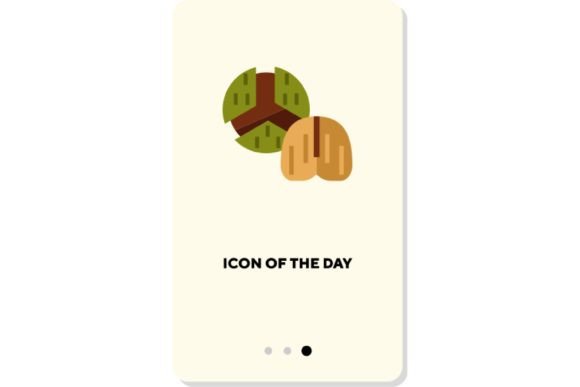
Tasty Nut Flat Icon: Visualizing Nutrient Benefits
In the digital landscape of health and wellness, clarity is currency. A Tasty Nut Flat Icon. Nutrient Benefit is more than just a decorative graphic; it serves as an immediate visual shorthand for complex nutritional data. When users scroll through meal planning apps, e-commerce grocery stores, or educational health blogs, they process images significantly faster than text. This specific vector illustration symbol bridges the gap between abstract health concepts and tangible food choices, making it an essential asset for modern web design.
The concept revolves around isolating the visual representation of nuts—such as almonds, walnuts, or cashews—in a clean, flat design style. By stripping away unnecessary shadows, gradients, and realistic textures, the icon focuses purely on form and color. This minimalism ensures that the core message remains intact: these foods are sources of vital nutrients. For designers and content creators, understanding how to leverage this isolated vector sign can dramatically improve user engagement and information retention.
Why Design Clarity Matters in Health Communication
Health information can often feel overwhelming. Consumers are bombarded with conflicting advice about macros, micros, and dietary restrictions. A well-designed icon acts as a cognitive anchor. It simplifies the decision-making process by providing instant recognition. When a user sees a stylized almond or peanut, their brain immediately associates it with protein, healthy fats, and energy. This association is powerful because it bypasses the need for lengthy explanations.
For marketers and bloggers, this efficiency is crucial. You have mere seconds to capture attention. Using a Tasty Nut Flat Icon. Nutrient Benefit is element allows you to break up dense text, highlight key selling points, and create a visually appealing layout that encourages scrolling rather than bouncing. The flat design aesthetic is particularly effective here because it aligns with contemporary UI trends, ensuring your content looks modern and professional across all devices.
Perspectives from Different Creators and Professionals
The value of this vector illustration varies significantly depending on who is using it and why. Understanding these different priorities helps in selecting the right assets for your specific project.
App Developers and UX Designers
For those building mobile applications, consistency and load speed are paramount. A vector-based icon scales perfectly from a tiny notification badge to a large feature graphic without losing quality. Developers prioritize flexibility and reliability. They need assets that integrate seamlessly into various color schemes and dark modes. An isolated vector sign allows them to change the fill color programmatically, adapting the icon to match the app’s theme or to indicate different states, such as selected versus unselected.
Consider a nutrition tracking app. When a user logs a snack, a quick visual confirmation via a recognizable nut icon provides immediate feedback. The flat style ensures that the interface remains uncluttered, reducing cognitive load for users who may be logging multiple items throughout the day.
Educators and Content Publishers
Educators focusing on nutrition science or culinary arts have different needs. Their primary goal is learning value and clarity. They use these icons to create infographics, presentation slides, and downloadable worksheets. For them, the accuracy of the representation matters, but so does the simplicity. A overly realistic image might distract from the educational point, whereas a flat icon highlights the subject clearly.
An educator might use a series of nut icons to compare protein content across different varieties. By keeping the visual style consistent, students can focus on the data rather than being distracted by varying artistic styles. The Tasty Nut Flat Icon. Nutrient Benefit is concept supports this by offering a standardized visual language that can be applied across an entire curriculum or publication series.
Small Business Owners and Entrepreneurs
For entrepreneurs running online stores selling healthy snacks or supplements, commercial value and brand identity are top priorities. They need visuals that convey quality and trustworthiness. A polished, professional icon set enhances the perceived value of their products. It signals that the brand pays attention to detail.
These business owners often lack extensive design resources. Therefore, ease of use is critical. They need assets that are ready to deploy on packaging, social media posts, and website banners without requiring hours of customization. A pre-made vector illustration allows them to maintain a cohesive brand aesthetic while saving time and money.
Practical Applications Across Industries
The versatility of this food and health concept extends beyond simple decoration. Here is how different professionals can maximize the utility of these elements:
- Meal Planning Services: Use nut icons to denote vegetarian or vegan-friendly options, highlighting plant-based protein sources instantly.
- Fitness Blogs: Incorporate these symbols into post-workout snack recommendations to visually emphasize recovery nutrients like magnesium and healthy fats.
- E-commerce Platforms: Display icons next to product listings to quickly communicate key benefits, such as "high protein" or "heart-healthy," improving conversion rates.
- Dietary Apps: Implement interactive icons that users can tap to reveal detailed nutritional breakdowns, enhancing interactivity and user engagement.
Each application requires a slightly different approach to implementation. For instance, a fitness blog might pair the icon with bold typography and energetic colors, while a medical journal might use muted tones and place the icon alongside rigorous scientific data. The underlying asset remains the same, but its context changes its impact.
Evaluating Quality and Usability
When selecting a Tasty Nut Flat Icon. Nutrient Benefit is vector for your project, consider several technical and aesthetic factors. First, ensure the file format is truly vector-based, such as SVG or AI. This guarantees scalability and editability. Raster images like PNGs may look fine at small sizes but will pixelate when enlarged, compromising professionalism.
Second, examine the level of detail. Flat design should be simple, but not so abstract that the object becomes unrecognizable. The shape of the nut should be distinct enough to differentiate between types if necessary, or generic enough to represent the category as a whole. This balance is crucial for effective communication.
Third, consider color accessibility. Ensure that the colors used in the icon provide sufficient contrast against various backgrounds. This is especially important for users with visual impairments. Many modern vector sets offer monochrome versions, which provide maximum flexibility for designers needing to adhere to strict accessibility guidelines.
Making the Right Choice for Your Project
Ultimately, the decision to use this type of iconography depends on your specific goals. If you are aiming for a playful, approachable brand voice, bright colors and rounded shapes in your nut icons will resonate well with families and casual consumers. If your audience is more clinical or professional, sharper lines and neutral tones may convey the necessary authority.
Beginners should start with pre-made packs that offer variety and consistency. This reduces the learning curve and ensures a polished look. Experienced designers might prefer to customize base vectors to create unique brand assets that stand out in a crowded market. Regardless of skill level, the core principle remains: use visual elements to simplify complexity and enhance understanding.
By integrating a Tasty Nut Flat Icon. Nutrient Benefit is into your digital ecosystem, you are not just adding an image; you are improving the user experience. You are making health information more accessible, more engaging, and more actionable. Whether you are coding an app, designing a brochure, or writing a blog post, these small visual cues play a significant role in how your message is received and remembered.