Understanding the Birthday Desserts Flat Icon: Boy Rejoice for Modern Web Design
In the expansive library of digital assets available to designers and developers, specific vector illustrations serve distinct functional and aesthetic purposes. One such asset is the Birthday Desserts Flat Icon. Boy Rejoice. This graphic element combines two powerful visual narratives: the celebration of a milestone through sweet food and the genuine emotional reaction of childhood joy. For professionals building websites, applications, or marketing materials, understanding the nuances of this specific icon style is crucial for effective communication.
This article explores what makes this flat icon distinct, how it compares to other visual styles, and when it represents the optimal choice for your project. By evaluating its strengths and limitations, you can make an informed decision about integrating this symbol into your design system.
Defining the Visual Concept and Utility
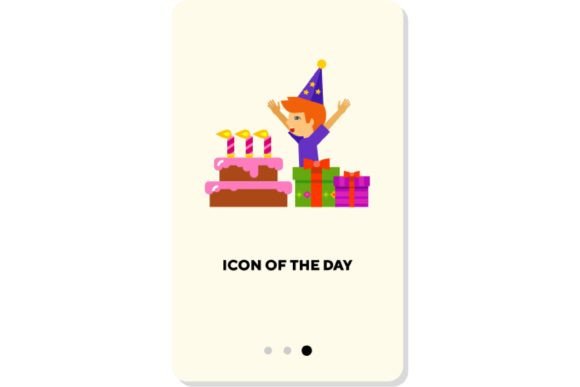
The Birthday Desserts Flat Icon. Boy Rejoice is not merely a decorative image; it is a semantic tool. It typically features a simplified, two-dimensional representation of a young boy expressing happiness, often alongside elements like a cake, gifts, or balloons. The "flat" design style means it lacks realistic shading, gradients, or three-dimensional depth, relying instead on solid colors and clean lines to convey meaning.
The primary utility of this icon lies in its ability to instantly communicate concepts related to childhood, parties, festive sweet food, and gratitude. When a user sees this icon, they do not need to read text to understand that the context involves a celebration or a reward. This immediate recognition reduces cognitive load, which is a key principle in user experience (UX) design.
Furthermore, because it is a vector illustration, the image remains crisp at any size. Whether used as a small favicon, a medium-sized button icon, or a large banner graphic, the quality does not degrade. This scalability is a significant advantage over raster images, making it a versatile resource for responsive web design.
Comparing Flat Icons with Alternative Visual Styles
When selecting visual assets, designers often choose between several stylistic approaches. Understanding where the Birthday Desserts Flat Icon. Boy Rejoice fits within this spectrum helps clarify its best use cases.
- Flat vs. Realistic Photography: Photographic images offer high emotional resonance and detail but can be heavy in file size and may clash with minimalist interfaces. The flat icon provides a lightweight, abstract alternative that maintains consistency across a brand’s visual language without the distraction of complex backgrounds or lighting issues.
- Flat vs. 3D Illustrations: Three-dimensional icons are trendy and engaging but require more processing power to render and can appear cluttered in dense interfaces. The flat style offers a cleaner, faster-loading option that prioritizes clarity over immersion.
- Flat vs. Line Art: Line art icons are subtle and elegant but may lack the visual weight needed to draw attention to key actions. The filled shapes of the Boy Rejoice icon provide stronger visual presence, making it suitable for call-to-action buttons or highlighted features.
The choice ultimately depends on the overall design system. If your website uses a material design or minimalist aesthetic, flat icons integrate seamlessly. However, if your brand relies on hyper-realism or intricate textures, this icon might feel too simplistic unless adapted with custom colors or effects.
Evaluating Strengths and Tradeoffs
Every design resource comes with inherent tradeoffs. Recognizing these allows for better strategic implementation.
Strengths
The most significant strength of the Birthday Desserts Flat Icon. Boy Rejoice is its universal appeal. The imagery of a child rejoicing over a gift or cake transcends many cultural barriers, evoking positive emotions associated with generosity and celebration. Additionally, the isolated nature of the sign means it can be placed on various background colors without requiring complex masking or editing.
From a technical perspective, vector files (such as SVG) are code-based, meaning they can be manipulated via CSS. Developers can change the color of the boy’s shirt or the cake frosting dynamically to match seasonal themes or user preferences, offering a level of flexibility that static images cannot match.
Limitations
However, the simplicity of flat design can sometimes lead to ambiguity. If the icon is too small or the color contrast is poor, the details of the boy’s expression or the specific type of dessert may become indistinguishable. In such cases, users might misinterpret the icon as a generic "happy person" rather than a specific birthday-related symbol.
Another limitation is specificity. While the icon effectively conveys "birthday" or "celebration," it may not be suitable for more nuanced contexts, such as a formal corporate anniversary or a solemn commemorative event. The playful, childish nature of the imagery restricts its appropriateness to casual, family-oriented, or youth-focused contexts.
Decision Factors: When to Use This Icon
Choosing the right visual asset requires aligning the icon’s characteristics with your project’s goals. Here are practical scenarios where the Birthday Desserts Flat Icon. Boy Rejoice is the right choice, and situations where an alternative might be better.
Ideal Use Cases
- E-commerce Gift Sections: Online stores selling toys, cakes, or party supplies can use this icon to categorize products. It signals to shoppers that they are in the right section for celebratory items.
- Event Planning Apps: Applications that help users organize birthdays or kids' parties can use this icon as a navigation element for creating new events or viewing upcoming celebrations.
- Loyalty and Reward Programs: The concept of "rejoicing at a received gift" aligns perfectly with loyalty rewards. Using this icon to denote a birthday bonus or free gift can enhance the perceived value of the offer.
- Educational Platforms: Websites focused on early childhood education or parenting resources can use this icon to mark milestones, achievements, or festive activities.
When to Consider Alternatives
If your target audience is primarily corporate professionals, a more abstract or geometric icon might convey professionalism better. Similarly, if your brand identity is built on luxury and exclusivity, the playful nature of a rejoicing boy might undermine the desired tone. In these cases, consider using elegant typography or minimalist line art that suggests celebration without explicit childish imagery.
Integration Best Practices
To maximize the effectiveness of the Birthday Desserts Flat Icon. Boy Rejoice, consider the following implementation tips:
Color Harmony: Ensure the icon’s palette complements your site’s primary colors. Since flat icons rely on solid blocks of color, clashing hues can be visually jarring. Most vector files allow for easy recoloring to maintain brand consistency.
Contextual Labeling: While icons are powerful, they should rarely stand alone without context. Pair the icon with clear text labels such as "Birthday Gifts," "Party Supplies," or "Celebrate With Us." This ensures accessibility for screen readers and clarifies intent for all users.
Consistent Sizing: Maintain consistent padding and sizing relative to other icons in your interface. Inconsistent icon sizes can disrupt the visual rhythm of a page and make the design appear unpolished.
Conclusion
The Birthday Desserts Flat Icon. Boy Rejoice is a versatile and emotionally resonant asset for digital designers. Its strength lies in its ability to convey joy, celebration, and childhood wonder through a clean, scalable format. By comparing it with other visual styles and understanding its specific tradeoffs, you can determine whether it aligns with your project’s needs.
For projects focused on family, entertainment, retail, or community engagement, this icon offers a direct and effective way to connect with users. However, always evaluate it within the broader context of your brand identity and user expectations. When used thoughtfully, it enhances usability and adds a touch of warmth to the digital experience.