Understanding the Books Flat Vector Icon with Hands: A Design and Usability Guide
In the realm of digital interface design, visual shorthand is essential for guiding user behavior without cluttering the screen. The Books Flat Vector Icon, particularly variations featuring hands holding an opened book or accompanied by eyeglasses, represents a specific niche within educational and literary graphic assets. These icons are not merely decorative; they serve as functional signifiers for learning, reading, research, and knowledge acquisition. When evaluating resources for web design and mobile applications, understanding the distinct characteristics of this outline-style imagery helps designers make informed choices that align with their project’s aesthetic and usability goals.
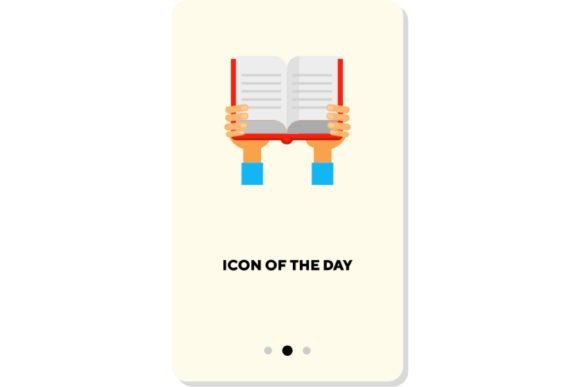
The concept behind the Book and Hands H motif is rooted in humanizing the act of reading. Unlike a static image of a closed book, which can symbolize storage or completion, an open book held by hands suggests active engagement, study, and discovery. Adding elements like eyeglasses further refines the context, pointing toward detailed examination, academic rigor, or vision care. This combination creates a versatile symbol suitable for e-learning platforms, library databases, optical services, and editorial blogs.
Distinctive Features of Outline and Flat Styles
When selecting vector illustrations, the style dictates how the icon integrates into the broader user interface. The flat vector approach prioritizes simplicity, using solid colors and minimal shading to ensure clarity at small sizes. However, the outline sign variant—often referred to as line art or stroke-based design—offers a different set of advantages. The Books flat vector icon in outline form relies on clean, consistent stroke weights to define shapes. This makes it highly adaptable to various background colors and themes, as the icon does not depend on specific fill colors to remain legible.
The inclusion of hands and eyeglasses adds complexity to the standard book icon. In a well-executed vector illustration, these elements must be balanced to avoid visual noise. The hands should appear natural yet stylized enough to remain recognizable at favicon sizes. Similarly, the eyeglasses must be distinct without overpowering the book itself. High-quality vectors achieve this balance through precise anchor points and optimized paths, ensuring that the file size remains low while maintaining crisp edges on high-resolution displays.
Comparing Symbolic Approaches in Educational Design
Designers often face the decision between using literal representations versus abstract symbols. The Book and Hands icon falls into the literal category, offering immediate recognition. This contrasts with more abstract alternatives, such as a simple graduation cap or a lightbulb, which may imply education but lack the specific connotation of reading or study. For platforms focused on literature, online courses, or research tools, the specificity of an open book is crucial.
Another comparison lies in the level of detail. Some icons feature intricate illustrations with shading and texture, suitable for hero images or large banners. However, for navigation bars, buttons, and app interfaces, the flat vector outline is superior due to its scalability and load speed. A complex illustration may become muddy when scaled down to 16x16 pixels, whereas a simplified outline retains its structural integrity. This tradeoff between artistic detail and functional clarity is a key consideration when choosing assets for responsive web design.
Practical Use Cases and Contextual Fit
The versatility of the Books Flat Vector Icon allows it to serve multiple functions across different industries. In educational technology, it commonly marks sections for course materials, reading lists, or digital libraries. The presence of hands suggests interaction, making it an effective call-to-action button for "Start Reading" or "View Syllabus." In healthcare, particularly optometry, the addition of eyeglasses transforms the icon into a relevant symbol for eye exams or prescription services, linking vision health directly to the act of reading.
Publishing houses and literary blogs also benefit from this imagery. An open book icon can denote new releases, editor’s picks, or deep-dive articles. The outline style complements minimalist web designs that prioritize whitespace and typography. By using a consistent stroke weight across all interface icons, designers create a cohesive visual language. If the rest of the site uses thin, elegant lines, a bulky, filled icon would disrupt the harmony. Thus, the outline version of the book and hands icon integrates seamlessly into modern, clean layouts.
Evaluating Quality and Technical Specifications
Not all vector files are created equal. When sourcing a Book and Hands H icon, several technical factors determine its utility. First, check if the file is truly vector-based (SVG, AI, or EPS) rather than a raster image disguised as a vector. True vectors allow for infinite scaling without quality loss. Second, examine the node structure. Overly complex paths with unnecessary anchor points can increase file size and cause rendering issues in some browsers. Clean, optimized paths ensure smooth performance.
Color customization is another critical factor. Outline icons should ideally be monochrome or use easily editable color layers. This allows developers to change the icon color via CSS, enabling dynamic states such as hover effects or active indicators. If the icon is hardcoded with specific colors, it limits flexibility. Additionally, ensure the icon has adequate padding and clear boundaries so it does not clash with adjacent elements when placed in tight UI spaces.
When to Choose Alternatives
While the Books Flat Vector Icon is powerful, it is not always the optimal choice. For brands aiming for a playful or childish aesthetic, a cartoonish, filled-color illustration might resonate better with the target audience. Similarly, if the interface is already dense with information, adding an icon with multiple elements (book, hands, glasses) could contribute to cognitive overload. In such cases, a simpler icon, such as a single open book or just a pair of glasses, might communicate the message more efficiently.
Furthermore, cultural considerations play a role. While the open book is a nearly universal symbol for knowledge, the depiction of hands can vary in interpretation based on gesture and style. Designers working on global products should test icons with diverse user groups to ensure the imagery is perceived as intended. If ambiguity arises, simplifying the icon to remove the hands may reduce misinterpretation while retaining the core meaning of reading.
Making the Right Decision for Your Project
Selecting the right icon involves balancing aesthetic preferences with functional requirements. The Book and Hands outline sign offers a sophisticated, professional look suitable for adult-oriented educational platforms, professional development tools, and literary services. Its strength lies in its ability to convey active engagement with content. However, designers must ensure that the level of detail matches the overall design system. If the rest of the interface uses ultra-minimalist icons, this more detailed variant might stand out excessively.
Ultimately, the decision depends on the narrative you wish to convey. If the goal is to emphasize the human element of learning and the tactile experience of reading, this icon is an excellent fit. If the focus is purely on data or quick access to documents, a simpler folder or document icon might be more appropriate. By carefully evaluating the context, audience, and technical constraints, designers can leverage the Books Flat Vector Icon to enhance user experience and reinforce brand identity effectively.
For those exploring resources, it is advisable to test the icon in situ. Place it within your actual interface mockups, adjust the stroke weight to match other elements, and verify its legibility on both desktop and mobile screens. This practical testing phase reveals whether the icon supports the user journey or becomes a distraction. With thoughtful implementation, this vector illustration serves as a subtle yet powerful tool in the designer’s toolkit, bridging the gap between visual appeal and functional clarity.