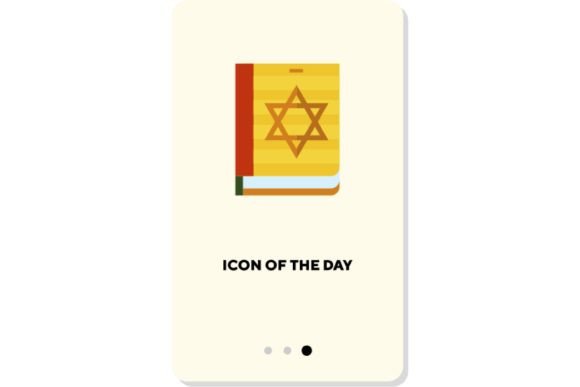
Book Reading Flat Icon. Torah Book Isola: Enhancing Digital Design with Meaningful Symbolism
In the rapidly evolving landscape of web design and digital communication, visual elements serve as the primary bridge between complex information and user understanding. Among the myriad of graphical assets available to designers, the Book Reading Flat Icon. Torah Book Isola stands out as a specialized yet versatile tool. This vector illustration is not merely a decorative element; it is a semantic signifier that conveys deep concepts of hobby, knowledge, and religion in a single, clean graphic. For developers, UI/UX designers, and content creators, understanding how to effectively integrate this specific icon can significantly enhance the clarity and aesthetic appeal of educational, religious, or literary platforms.
Understanding the Visual Language of the Torah Book Icon
The term "flat icon" refers to a minimalist design style that avoids three-dimensional effects such as gradients, shadows, or textures. Instead, it relies on solid colors, simple shapes, and clear lines to convey meaning. When applied to the concept of a Torah book, this style strips away unnecessary detail to focus on the essential form: an open book, often accompanied by symbolic elements like a crown or traditional Hebrew script motifs, depending on the specific variation of the Torah book isolated sign.
The phrase "Torah Book Isola" indicates that the graphic is presented on an isolated background, typically transparent or white. This isolation is crucial for web design because it allows the icon to be placed seamlessly over various colored backgrounds, buttons, or interface elements without clashing with surrounding design components. As a vector illustration, the image is resolution-independent, meaning it can be scaled from a tiny favicon to a large banner header without losing quality or becoming pixelated. This technical flexibility makes it an indispensable asset for responsive web design.
Addressing Design Challenges in Niche Content
Designers working on websites related to Judaism, religious education, or theological studies often face a unique challenge: how to represent sacred texts respectfully while maintaining modern usability standards. Generic book icons may fail to convey the specific cultural and spiritual weight of the Torah. Conversely, overly ornate or photographic images can slow down page load times and clutter the user interface.
This is where the Book Reading Flat Icon. Torah Book Isola provides a practical solution. It balances reverence with modernity. By using a flat design approach, the icon remains lightweight and fast-loading, which is critical for SEO and user retention. At the same time, its specific symbolism ensures that users immediately recognize the context as religious or scholarly, rather than generic literature. This immediate recognition reduces cognitive load, allowing visitors to navigate the site with greater ease and confidence.
Practical Applications Across Digital Platforms
The utility of this vector illustration extends far beyond simple decoration. Here are several strategic ways to implement the Torah book isolated sign in web projects:
- Educational Portals: For online yeshivas or Jewish study groups, this icon can serve as a navigation button for course materials, lesson plans, or text archives. It signals to the user that clicking here will lead to structured learning resources.
- Religious Community Websites: Synagogues and community centers can use the icon to highlight sections dedicated to weekly Torah portions, holiday guides, or historical archives. It acts as a visual anchor for spiritual content.
- E-commerce for Religious Goods: Online stores selling Judaica can utilize the icon to categorize products such as printed Torahs, study guides, or commentary books. It helps shoppers filter results efficiently.
- Mobile Applications: In apps focused on daily prayers or study schedules, the flat icon’s simplicity ensures it remains legible even on small screens. It can function as a tab bar item or a notification badge for new content updates.
Each of these applications leverages the icon’s ability to communicate "knowledge" and "religion" instantly. By associating the visual symbol with specific actions or content types, designers create a more intuitive user experience.
Tailoring the Approach for Different Audiences
Different users interact with digital content in distinct ways, and the deployment of the Book Reading Flat Icon. Torah Book Isola should reflect these differences. For instance, an older demographic visiting a synagogue website may prioritize clarity and familiarity. For them, the icon should be paired with clear text labels, ensuring there is no ambiguity about its function. The flat design’s high contrast and simple lines aid readability for users with visual impairments.
Conversely, a younger audience engaging with a modern Jewish lifestyle blog might appreciate a more stylized interpretation. Designers might pair the traditional icon with contemporary color palettes or animate it slightly upon hover to create engagement. In this context, the icon serves not just as a functional marker but as part of the brand’s visual identity, signaling that the content is both rooted in tradition and relevant to modern life.
Developers focusing on accessibility must also consider how screen readers interpret these graphics. Since the Torah book isolated sign is a vector element, it should include appropriate alt text or ARIA labels. This ensures that visually impaired users understand the icon’s purpose, whether it represents a download link for a PDF or a link to a video lecture.
Maximizing Impact Through Strategic Implementation
To get the most out of this asset, consider the following recommendations:
- Consistency is Key: Ensure that the Book Reading Flat Icon. Torah Book Isola matches the stroke width and color scheme of other icons in your set. Inconsistency can make a website look unprofessional and disjointed.
- Contextual Placement: Place the icon near related keywords such as "study," "learn," or "scripture." This reinforces the semantic connection for both users and search engines, improving the overall relevance of the page.
- Optimization for Performance: Although vector files are generally small, ensure they are properly optimized. Use SVG formats for web implementation to keep file sizes minimal while retaining scalability.
- Cultural Sensitivity: When using religious symbols, always ensure the context is respectful. Avoid placing the icon in trivial or unrelated contexts that might diminish its significance to the target audience.
By treating the icon as a functional component of the user journey rather than just an image, designers can create more meaningful and effective digital experiences. The Hobby, knowledge, religion concept embedded in the graphic allows it to transcend mere aesthetics, becoming a tool for communication and connection.
Conclusion
The Book Reading Flat Icon. Torah Book Isola is more than a simple graphic; it is a powerful communication tool for digital platforms centered on learning and faith. Its flat design ensures modern usability and performance, while its specific symbolism honors the depth of the subject matter. Whether used in educational apps, community websites, or e-commerce stores, this vector illustration helps bridge the gap between traditional values and modern technology. By implementing it thoughtfully, designers can create interfaces that are not only visually appealing but also deeply resonant with their audience’s needs and expectations.